CONUS Per Diem Rates: How the Standard Rate Works
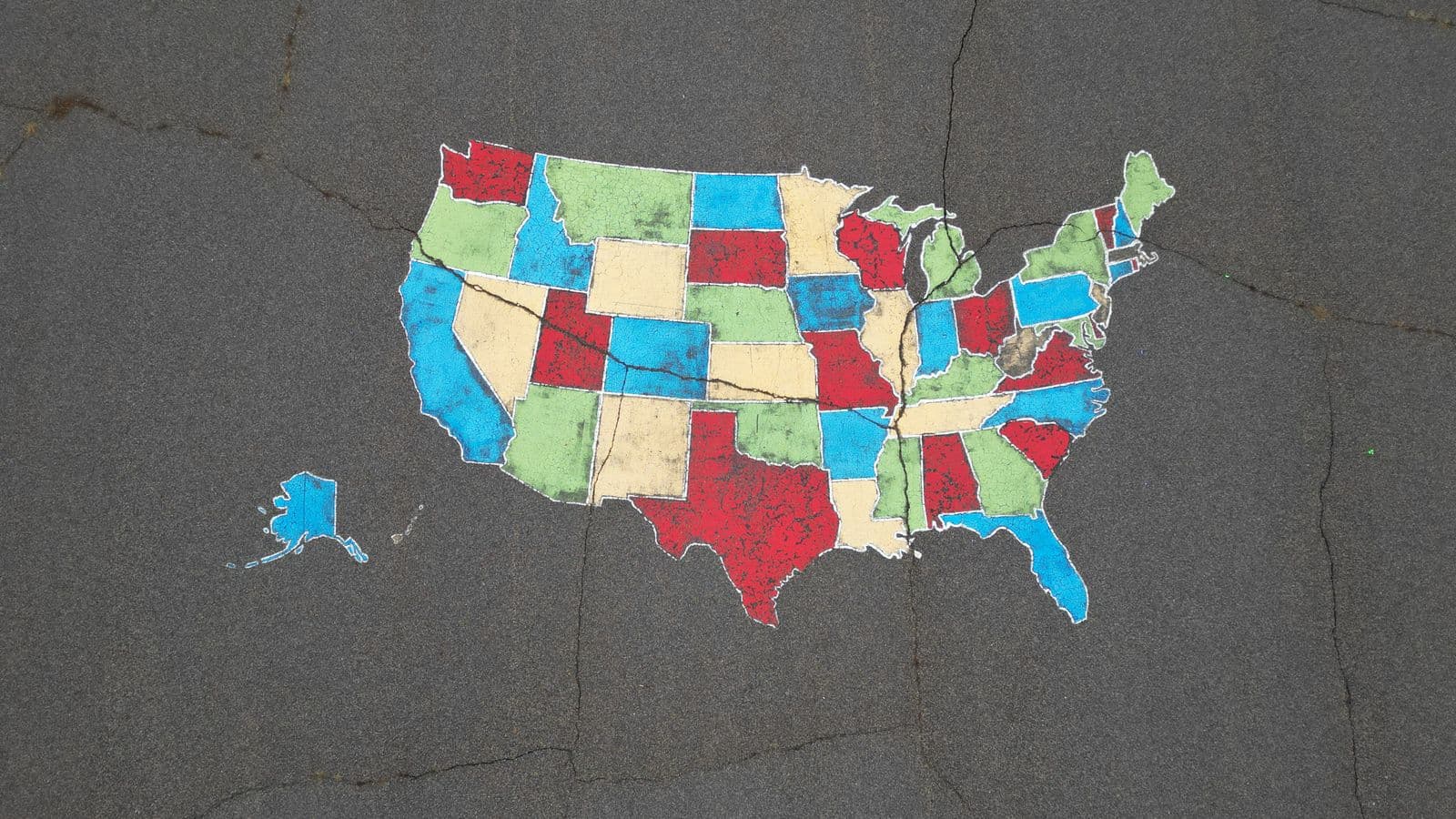
Photo by Giant Asparagus on Pexels source
In this guide
TL;DR
CONUS is the continental United States: the 48 contiguous states plus Washington, DC. GSA's standard rate for FY2026 is $110 lodging + $68 M&IE = $178/day, and it applies automatically to every CONUS destination unless GSA has published a separate non-standard rate for that specific county or city. Only around 300 locations get their own rate. If your destination isn't in the GSA lookup tool, that's not an error — it simply means the standard rate applies, and that's the correct outcome for the large majority of the country.
What CONUS actually covers
CONUS stands for the continental United States. In per diem terms, that means the 48 contiguous states and the District of Columbia. It does not include Alaska, Hawaii, or US territories such as Puerto Rico and Guam. Those locations sit outside CONUS and use a different rate-setting system run by the Department of Defense and the State Department, not GSA. If you're travelling to one of those places, see OCONUS vs CONUS per diem for how the rules differ.
Within CONUS, GSA (the General Services Administration) sets two kinds of rates: one standard rate that applies almost everywhere, and a list of non-standard rates for a smaller set of higher-cost destinations. Understanding which one applies to your trip is really a question about geography and a lookup, not a calculation.
The standard rate is the default, not the exception
It helps to flip how most people think about this. Non-standard rates get the attention because they're higher and tied to specific cities, so they feel like the "real" rate. In practice, the standard rate is the baseline that applies everywhere in CONUS unless GSA has explicitly carved out an exception for that county. If a destination has no published non-standard rate, the standard rate isn't a fallback of last resort — it's simply the rate for that place, by design.
For FY2026 (running 1 October 2025 to 30 September 2026), the standard CONUS rate is $110 for lodging and $68 for meals and incidental expenses (M&IE), for a combined $178 per day. That figure is unchanged from FY2025. Our standard CONUS per diem rate guide covers how the rate itself is calculated and adjusted; this article focuses on where it applies.
Non-standard locations don't get an arbitrarily higher M&IE figure. GSA uses five fixed M&IE tiers, and the standard rate sits at the bottom of that range, not below it.
| Tier | Daily M&IE | Applies to |
|---|---|---|
| Standard | $68 | Every CONUS county without a published non-standard rate |
| Tier 2 | $74 | Selected non-standard locations |
| Tier 3 | $80 | Selected non-standard locations |
| Tier 4 | $86 | Selected non-standard locations |
| Tier 5 (highest) | $92 | Major high-cost cities, e.g. Manhattan, San Francisco |
GSA FY2026 M&IE tiers — the standard rate sits at the base of the scale
How many places actually have their own rate?
There are more than 3,000 counties and county-equivalents across the continental United States. Of those, GSA publishes individual non-standard rates for only around 300 locations, most built around a key city and its surrounding county. Everything else — the substantial majority of CONUS — runs on the standard rate.
GSA states this plainly in its own guidance: the standard rate applies to roughly 85 percent of counties in the continental United States, while non-standard rates cover the remaining slice. That split has stayed broadly stable for years, since GSA reviews and adjusts the non-standard list only when actual lodging cost data justifies a change, not every county in turn.
“Maintaining the FY 2026 per diem rates is a prudent step that reflects our commitment to responsible stewardship of taxpayer funds.”
— Larry Allen, Associate Administrator, GSA Office of Government-wide Policy
How to check definitively whether your destination is standard or non-standard
Guessing isn't necessary. GSA's per diem tool gives a definitive answer for any US destination in seconds.
- Go to the GSA per diem rate lookup and select the correct fiscal year (1 October to 30 September).
- Enter the city and state, or the zip code, for your destination.
- If a specific city or county result appears with its own lodging figure, that's the non-standard rate — use it.
- If the tool returns "standard rate" or shows no dedicated listing for that location, the standard $110/$68 figures apply.
- For quick totals across a trip, run the numbers through PerDiemWise's per diem calculator, which applies the correct rate automatically by location and date.
What happens if a destination isn't listed
This is the point that trips people up most. If you search a small town or a rural county and get no dedicated result, that is not a data gap or a mistake to fix. It's the expected outcome. GSA only maintains separate listings for the roughly 300 places where lodging costs run consistently above the national baseline. Every other county falls back to the standard rate automatically, and that fallback is correct, not a workaround. There's no penalty for using it and no need to search for a "real" rate that doesn't exist for that location.
The scale of the difference between standard and non-standard locations can be large, which is exactly why GSA bothers to separate them out. Manhattan is a useful extreme example.
| Standard rate (most of CONUS) | New York City (non-standard) | |
|---|---|---|
| Lodging | $110/night, flat all year | $179–$342/night, seasonal |
| M&IE | $68/day | $92/day |
| Combined daily maximum | $178 | $271–$434, depending on month |
Standard CONUS rate vs a non-standard example (New York City, FY2026)
That gap is why checking the actual location matters for expensive cities, even though it makes no practical difference for the thousands of counties where the standard rate is simply correct.
Why this matters for travellers and finance teams
For anyone booking government or reimbursed business travel, the practical rule is straightforward: assume the standard rate unless the destination appears by name on GSA's non-standard list. Building trip budgets around this default, then adjusting only for the handful of cities that need it, is far faster than treating every trip as a fresh lookup. It also avoids the common error of applying a nearby big city's non-standard rate to a smaller town in the same state that is, in fact, still on the standard rate. Rates are set per county, not per state, so proximity to an expensive city doesn't change the rate for a place with no listing of its own. See state-by-state per diem rates for how standard and non-standard rates are distributed across each state, and our broader GSA per diem rates guide for the full mechanics of how rates are built and updated. For background on per diem generally, start with what per diem means.
Does every county in the US have its own per diem rate?
No. Only around 300 counties and cities have a published non-standard rate. The other 3,000-plus counties in CONUS use the standard rate of $110 lodging plus $68 M&IE for FY2026.
What if my destination doesn't appear in the GSA per diem lookup tool?
That means it uses the standard rate. No dedicated listing is the expected result for most of the country, not a sign of missing data.
Is CONUS the same thing as the standard rate?
No. CONUS is a geographic area — the 48 contiguous states plus DC. The standard rate is the default reimbursement figure used within that area, distinct from the non-standard rates set for specific higher-cost locations.
Do Alaska and Hawaii use the CONUS standard rate?
No. Alaska, Hawaii and US territories are OCONUS and use rates set by the Department of Defense and the State Department, not GSA's CONUS system.
Does the standard rate change partway through the fiscal year?
No. GSA fixes the standard rate for the full fiscal year, running 1 October to 30 September, and it does not change until the next year's rates are published.
Sources and further reading
Calculate it now
Use the free GSA per diem and IRS mileage calculators.